
Find Residents Across Tempe Records
A Tempe residents directory search works best when the first source matches the fact already known. An address belongs in the Maricopa County Assessor search. A court case belongs in the court that heard it. A person from decades ago belongs in a dated directory, census, or museum catalog. Each source proves a narrow point, not present occupancy.
Begin with one stable fact, such as a full name, parcel number, case number, or street address. Then save the date and role shown in the result. A deed names a grantor and grantee. A parcel card names an indexed owner. A docket names a party. Those roles should never be flattened into one claim that a person lives at an address now.
- Search the county property roll by a complete owner name, a standardized address, or an assessor parcel number.
- Follow the parcel's deed reference into the Recorder index and confirm the legal description.
- Choose the direct Tempe, county, or statewide court index that covers the case category.
- For older residents, compare a city directory entry with a census year, obituary, or historic vital image.
- When no portal fits, send a narrow request to the office that keeps the record.
The complete address workflow belongs in the Tempe street directory. That path adds adjacent parcels, permits, code cases, and older address sources without turning an owner list into a household list.
Tempe Resident Records Custodians
Tempe is not the Maricopa County seat. Resident records therefore sit at city counters in Tempe, county offices in Phoenix and Mesa, and Arizona portals. The City Clerk handles general city records through JustFOIA. The Assessor connects parcels to indexed owners, while the Recorder keeps the permanent instrument index. Elections data follows separate statutory access rules.
Counter access still matters. Arizona Public Records Law, A.R.S. §§ 39-121 through 39-161, opens public records for inspection during office hours and requires prompt handling, subject to redaction and record-specific confidentiality. It does not force an office to create a new list in response to a question.
Maricopa County Recorder
301 W. Jefferson St., 2nd Floor
Phoenix, AZ 85003
602-506-3535
Tempe City Clerk
31 E. Fifth St., 2nd Floor
Tempe, AZ 85281
480-350-4311
Inspection may be free even when copies cost money. Record the custodian, request date, exact index searched, and the result date so another person can repeat the search.
Search Tempe Property Records First
The Maricopa County Assessor is the strongest first stop when a Tempe address or property owner is known. Its main box accepts an assessor parcel number, a full owner name, or a standardized street address. A parcel card separates the situs address, meaning the physical property address, from the mailing address used for tax notices. It also links the deed number, legal description, subdivision, values, sales, and property characteristics.
That separation prevents a common mistake. A matching mailing and situs address may support owner occupancy, but it does not prove it. A different mailing address may point to an owner elsewhere, yet it says nothing about people who use the Tempe property.
| Assessor input | Useful format | What to preserve |
|---|---|---|
| Owner | Full name without an abbreviated first name | Indexed owner and mailing address |
| Address | Number, direction, street, type, city and ZIP | Situs address and parcel number |
| Parcel | APN with or without separators | Legal description, MCR and deed link |
The assessor search screen shows how the official property trail begins. View the Maricopa County property search before using the fields shown below.
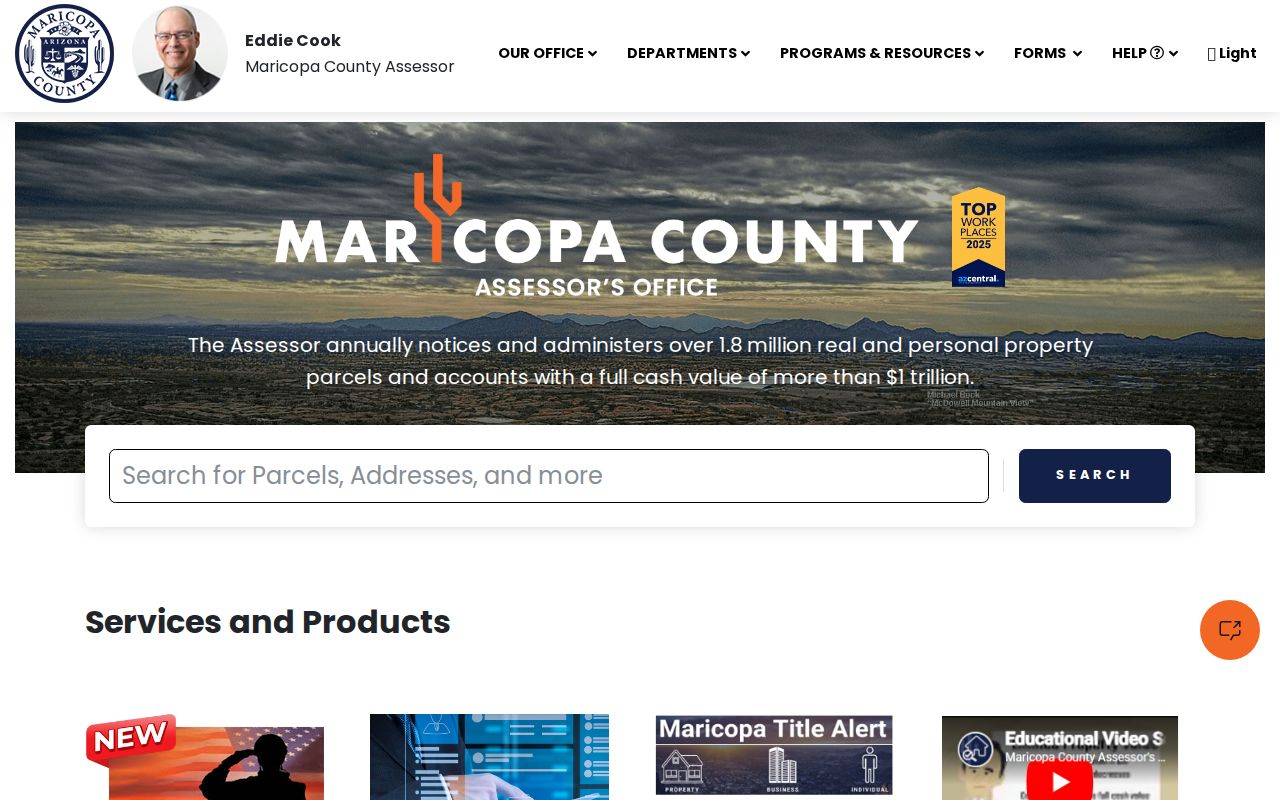
The screenshot confirms the official source and its search-first layout; the parcel result, not the start page, supplies the facts needed for later checks.
Tempe Recorder Names Need Context
The Maricopa County Recorder reports more than 52 million recorded documents. Its index can connect Tempe residents and entities to deeds, deeds of trust, releases, liens, judgments, plats, covenants, and affidavits. Search is free, as are unofficial document images. Official copies cost $1 per page, and certification adds $3 per document.
A grantor transfers an interest; a grantee receives it. Search results make sense only when that role, the recording date, and the legal description are retained. The Recorder's newer Research mode can search names, addresses, and legal-description text, but it covers only the latest two years. Older work requires party names, document numbers, book and page references, plats, or staff help.
- Index
- A finding tool that points to a record; it is not the certified record itself.
- Parcel
- A legally described piece of land tracked by an assessor number.
- Roll
- An official list created for a public function, such as assessment or voter registration.
- Criss-cross directory
- A dated directory arranged by address so a search can move from a street to a listed householder.
Note: The Recorder warns that an index search does not guarantee that a Tempe parcel is free of liens.
Tempe Voter Directory Has Limits
The Arizona Voter Information Portal supports personal registration and election checks using county and identifying information. It is not a public street browser. Arizona law permits certain voter-file fields for authorized uses, but month and day of birth, Social Security numbers, driver identifiers, signatures, email addresses, and protected-voter data remain withheld.
Participation history means that a person took part in an election. It never shows a ballot choice. Full-file requests go through the Maricopa County Recorder, require a statutory purpose, and use paid secure delivery. Internet posting and commercial use are prohibited. Protected voters and Address Confidentiality Program participants can have registration and precinct data sealed.
The official voter portal pictured here is a verification gate, not a Tempe residents directory download. Open the Arizona voter lookup to check the current options.
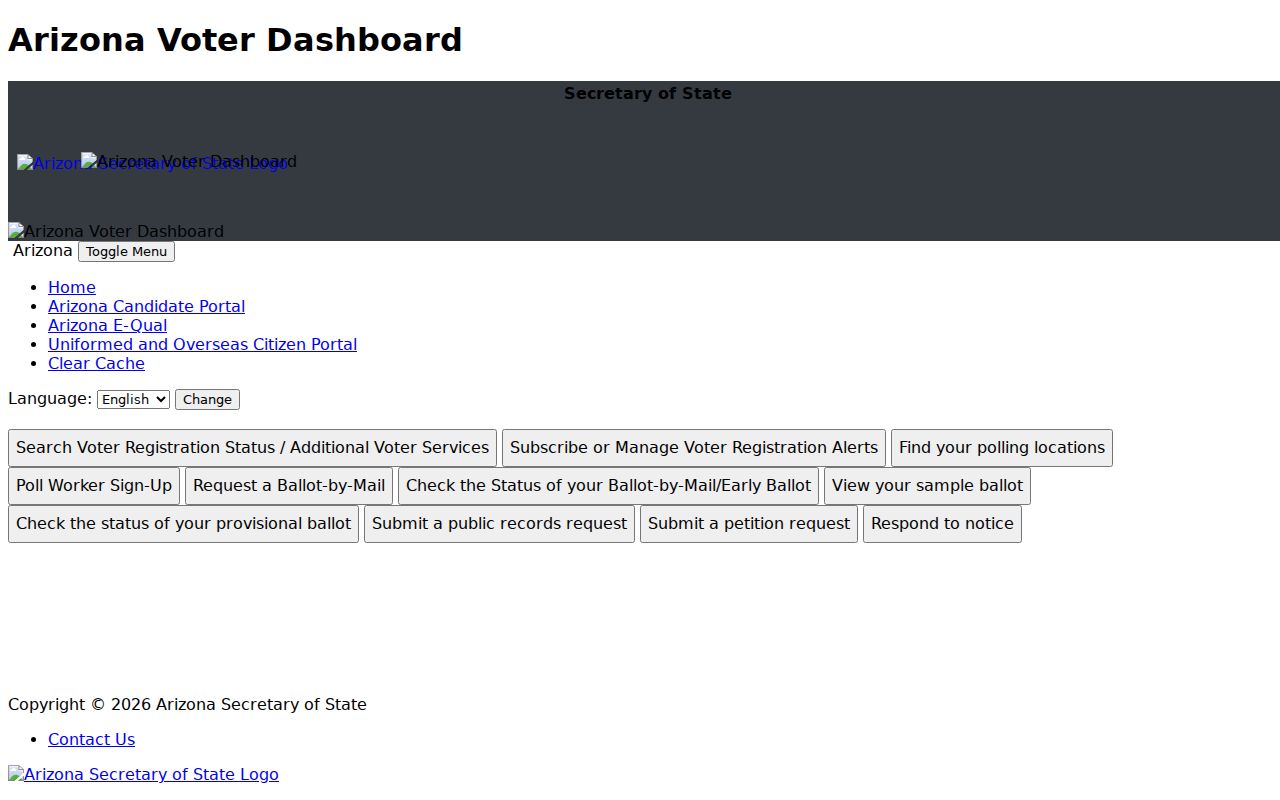
The required identity details help explain why the portal should not be described as a name-only residents list.
Current Tempe Resident Record Paths
No current Tempe residents directory is both complete and official. Instead, several dated systems in Arizona confirm different roles at the time shown. An assessor record confirms indexed ownership. A deed confirms a party to a recorded transfer. A case index confirms a court party. A business filing confirms an entity role. Each record may lag a move or preserve an old address.
| Official source | What the name means | Keeper | Access route |
|---|---|---|---|
| Property roll | Indexed parcel owner | Maricopa Assessor | Free portal; history by email request |
| Recorded documents | Party to an instrument | Maricopa Recorder | Free index and unofficial images |
| Voter information | Registered voter under statutory controls | State and county elections | Identity-based portal or regulated file request |
| Court docket | Named party in a covered case | Court of record | Index, counter, request, or paid document access |
| Corporation filing | Principal, agent, or entity role | Arizona Corporation Commission | Public entity search |
| Museum catalog | Name or place attached to a historic item | Tempe History Museum | Public keyword search; appointment archives |
Official sources keep dates, roles, and provenance. Commercial people-finder results may combine stale government and commercial data, charge for access, or merge same-name people. They are clues at most. Confirm every useful claim with the issuing custodian.
Choose Tempe Court Lookup Carefully
Tempe court records are split among systems with different coverage. The direct municipal lookup covers local misdemeanors, city-code matters, and civil traffic. Maricopa Superior Court provides civil, criminal, family, and probate docket modes. Justice Courts keep their own limited-jurisdiction records. The statewide index covers participating courts, but its coverage table describes Tempe Municipal and Maricopa Justice entries as delinquent-only and Maricopa Superior entries as criminal-only.
The statewide result is not the official record. It updates weekly and excludes sealed cases, protection orders, mental-health matters, juvenile records, victim and witness information, and other protected material. A missing result can reflect those rules, an update delay, spelling, or a coverage gap.
Start at the Arizona Public Access case lookup only when its coverage fits the question.
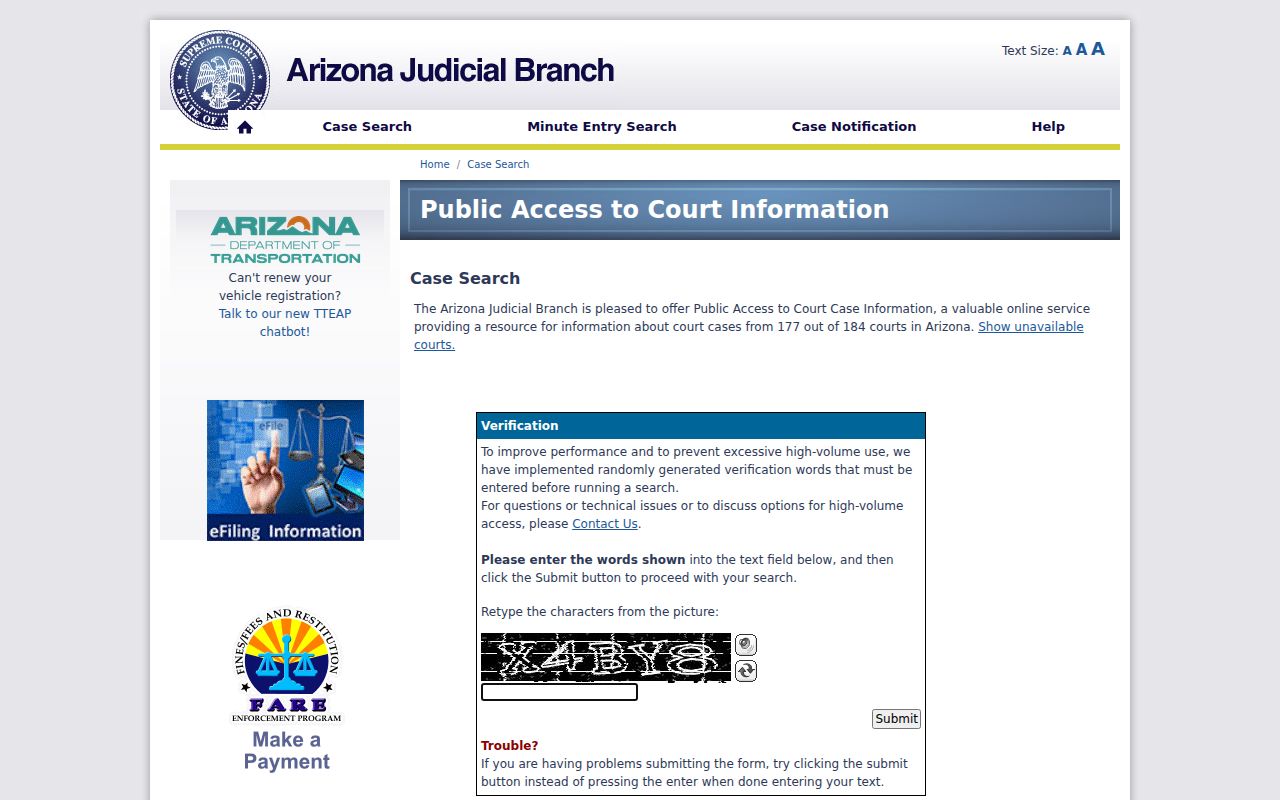
The search gate and public-data notices reinforce the need to verify a case number, court, date, party role, and disposition with the clerk.
Historic Tempe Vital Record Lookup
Arizona separates public genealogy images from current certified copies. A.R.S. § 36-351(B) opens births 75 years after the event and deaths 50 years after the event. The genealogy portal displays birth images from 1855 through 1945 and death images from 1870 through 1970. Legal eligibility and online loading are separate facts, so a newly eligible year may not yet appear.
Recent Tempe birth and death certificates come from Maricopa County Vital Registration or the Arizona Department of Health Services for eligible applicants. Tempe has no separate city registrar. The East Valley counter is in Mesa. Marriage licenses and divorce records are held through the Clerk of the Superior Court. Adoption records remain sealed for 100 years, with the Confidential Intermediary Program providing a lawful route in qualifying searches.
Historic images are useful for family research because they may supply parents, spouse, event place, and dates. They are not certified copies. A verified residents directory trail should cite the image and its year, then use the correct office if legal proof is required.
Tempe Museum Expands Name Searches
The Tempe History Museum catalog contains more than 70,000 searchable objects. Name and place keywords can lead into Old Settlers, campus life, houses of worship, neighborhood history, and decade collections. The physical archives add nearly 50,000 cataloged photographs and documents through appointment research.
Tempe Public Library adds Ancestry Library Edition and HeritageQuest, but both are available only on library computers. The library also routes obituary and newspaper searches. Earlier Arizona Republic material is available through the Museum by appointment. These access limits matter when an online search seems empty.
Arizona State Research Library in Phoenix holds directories, maps, newspapers, and vertical files. Its biographical database points to names in books, newspapers, obituaries, and other files, but it is not comprehensive. A focused reference request should include name variants, approximate dates, and a clear Tempe connection.
Historical Tempe Residents Directory Sources
Tempe's digitized directory trail reaches at least 1903. Arizona Memory Project provides Skinner directories and a Salt River Valley sequence that includes Tempe in several years from the 1910s through 1930. The 1925 volume has Tempe rural-route pages, but its householder street guide is Phoenix-only. That distinction keeps a rural-route entry from being misread as a Tempe criss-cross listing.
Later publishers include Southside, Salisbury, National Home, Mullin-Kille or Baldwin, and Polk. The 1968 Polk Mesa-Tempe directory explicitly advertises a street and avenue guide with household and business-space occupants. It is stronger address-to-name evidence than the 1925 structure. The full historical shelf, including the last printed Tempe run, still needs confirmation from the Museum or State Research Library.
Sanborn fire maps add buildings rather than names. ASU lists Tempe editions beginning in 1890, before incorporation in 1894, and the Library of Congress offers the seven-sheet 1915 map. A household trail becomes stronger when a directory address, census household, parcel description, and mapped footprint agree. The full collection method appears in the Tempe city directory archive.
Tempe Address Privacy Stops Searches
Arizona's broad public-record rule does not override closed record classes. Recent vital records, motor-vehicle personal data, protected voter data, sealed or juvenile court files, adoption records, and other confidential information remain restricted. The Arizona Address Confidentiality Program provides a substitute address and mail forwarding for qualifying survivors of domestic violence, sexual offenses, or stalking.
A Tempe residents directory search should end when a source is closed. Trying to infer a protected location from parcel neighbors, relatives, or stale records defeats the safety purpose of those laws. A no-result is often the correct result.
Lawful personal use. Public records may support family history, reunion, civic research, estate work, and scam checks. Never use them to watch, stalk, harass, intimidate, or harm another person.
Tempe Business Names Need Roles
Arizona Corporation Commission filings can supply an entity name, status, formation date, county, statutory agent, principals, and filing images. These are business affiliations, not proof that a person occupies a listed address. Registered agents may serve many entities, and an office address may belong to a service firm.
The official entity screen helps preserve those roles. Use the Arizona Corporation Commission entity search and verify the current destination because the state scheduled a portal migration in January 2026.

The fields shown make the affiliation trail useful when paired with formation dates, entity status, and an independent Tempe record.
Protect Tempe Names With Title Alert
Maricopa County's Title Alert is a free property-fraud warning tool launched in June 2023. The Recorder reports more than 92,900 accounts, and one account can monitor unlimited individual or business names. Hyphenated surnames should be entered in both hyphenated and separated forms.
An alert arrives after a newly recorded document matches a monitored name. It does not block a recording, prove fraud, or replace review of the instrument. Compare the notice with the Recorder image, parcel legal description, and known transaction facts. Concerns about a forged recording belong with the Recorder and law enforcement.
This is a practical end to a Tempe resident records workflow: find the official record, keep the role and date, verify it with a second source, and protect sensitive address information while acting on what the custodian actually shows.